The Contractor’s Guide to Selling Solar-VRF
Positioning, objection handling, and a proposal structure that wins against the cheaper like-for-like bid — by reframing the decision from first cost to total cost of ownership.
By the GetVRF editorial team · Updated July 12, 2026 · 11 min read
Why the like-for-like bid wins by default
When an owner is replacing dead equipment, the path of least resistance is a same-for-same quote: the RTU died, quote a new RTU. Your solar-VRF proposal shows up with a bigger first number, and on a spreadsheet that only has a "price" column, you lose. The problem isn't your system — it's the column. Your entire job is to change what's being compared.
This guide is a positioning playbook, not a script. It assumes you already know the engineering (see VRF vs. Traditional and Solar-VRF 101); the goal here is to make the better system also the easier yes.
Reframe from first cost to total cost of ownership
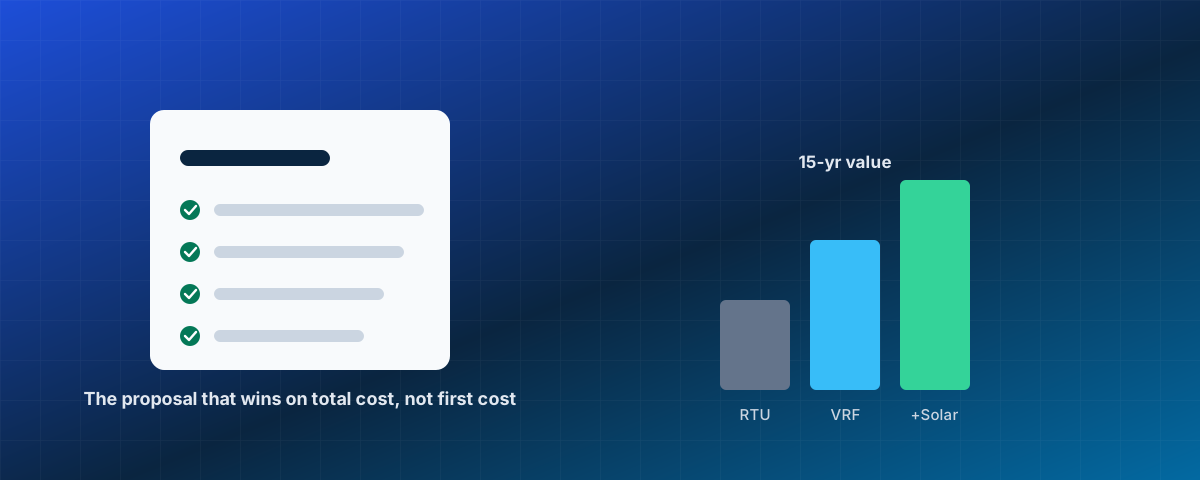
The single most important move is to put a 15-year total cost of ownership in front of the owner, side by side, with the like-for-like option. First cost is one line in a table of five:
| Line the owner should see | Why it moves the decision |
|---|---|
| Installed cost | Your weakest line — show it, don't hide it, then move on. |
| Incentives (itemized) | Rebates + 30% federal ITC on solar cut the net gap immediately. |
| Annual energy cost | Efficiency + solar offset is where the recurring win lives. |
| Maintenance & lifespan | Longer VRF life spreads cost; fewer fuel systems to service. |
| 15-year TCO (the number) | The comparison you actually want them making. |
Owners rarely reject a lower lifetime cost. They reject an unexplained higher sticker. Give them a defensible lifetime number and the conversation changes.
Objection handling
| Objection | Reframe |
|---|---|
| "It's too expensive." | "Compared to what, over how long? Here's the 15-year number next to the RTU — and here's what the incentives take off the top today." |
| "Gas is cheap right now." | "It is — and this system doesn't bet against gas prices, it removes the bet. The solar side offsets electric HVAC to near zero; the RTU keeps buying fuel every winter regardless." |
| "I'm worried about VRF service." | "Fair — a poorly serviced VRF underperforms. That's why we're factory-certified on this brand and why we'd put the maintenance plan in writing. Here are references." |
| "The payback is too long." | "Let's look at it as an internal rate of return, not just years — and remember the incentive clock: the 30% ITC and current rebates are time-limited." |
| "I might sell the building." | "Then let's talk about how efficient, all-electric, low-carbon HVAC affects appraised value and buyer appeal in this market — sometimes the capex returns at sale, not just in bills." |
Notice the pattern: every reframe answers the objection honestly, then re-anchors on lifetime value or the incentive clock. Don't argue the first-cost point — concede it and change the frame.
The proposal structure that closes
- One-page comparison up front. Like-for-like vs. solar-VRF, five lines, 15-year TCO bolded. Decision-makers read page one.
- Incentives itemized with who-files-what. Show the rebate and the ITC as line items and state that you handle (or guide) the paperwork. Uncaptured incentives are the most common reason a good bid looks expensive.
- Financing options. A monthly number next to the projected energy savings reframes "big check" into cash-flow.
- Comfort & risk, briefly. Zoning, quiet operation, resilience, and fuel-price/decarbonization risk removal — the non-energy value.
- Proof. Certifications, references, and a written maintenance plan that neutralizes the service objection before it's raised.
Keep the engineering appendix for the appendix. The front of the proposal sells the decision; the back defends it.
Selling the solar attach
The solar is what turns a marginal VRF-vs-RTU argument into a decisive one — it's the only path to near-zero HVAC energy, and it carries the 30% ITC. Position them together, not as an upsell: "The system is all-electric, which means the roof can pay for the heating and cooling." Under net-billing states, be honest that self-consumption and storage now drive solar value (see Sizing Solar for an All-Electric HVAC Load) — owners trust the contractor who explains NEM 3.0 rather than the one who pretends it didn't happen.
If you don't do both trades in-house, partner. The owner wants one throat to choke and one integrated number — the contractor who delivers that wins the like-for-like fight almost every time.
Frequently asked questions
How do I sell VRF against a cheaper rooftop-unit bid?
Change what’s being compared. Put a 15-year total-cost-of-ownership table in front of the owner with installed cost, itemized incentives, annual energy, maintenance/lifespan, and the bolded lifetime number. Concede the higher first cost, then re-anchor on lifetime value and the time-limited incentives.
What is the best response to "gas is cheap right now"?
Reframe from betting on prices to removing the bet: solar-integrated VRF offsets electric HVAC toward zero, while a gas system keeps buying fuel every winter regardless of price. You’re selling price certainty and decarbonization, not a gas-vs-electric spread.
How should incentives appear in a proposal?
Itemized as line items — the applicable rebate and the 30% federal solar ITC — with a note on who files the paperwork. Uncaptured incentives are the most common reason a strong bid looks overpriced next to a like-for-like quote.
Should I sell the solar and VRF together or separately?
Together. The solar is what makes near-zero HVAC energy possible and carries the ITC, turning a marginal efficiency argument into a decisive one. Present one integrated 15-year number; partner with a solar or VRF specialist if you don’t do both trades in-house.
Sources
- GetVRF engine TCO methodology & scenarios (calculator page)
- Federal 30% commercial solar ITC (IRC §48E) and state/utility rebate terms via DSIRE
- CPUC Net Billing Tariff (NEM 3.0) export-compensation framework
- GetVRF VRF vs. Traditional HVAC comparison and cost ranges
Educational content — actual system performance, costs, and program terms vary by building and market. Get site-specific engineering and bids before deciding.